
Pylos Castle (Niokastro), Messenia
No data
Category
Archaeological site
Location
Messinia
Keyword
ΠΥΛΟΣ
Rating
0/5
Vatika Castle is first mentioned in the Chronicle of the Morea, which records the granting of the area by William II Villehardouin to the nobles of Monemvasia. In 1262, the region came under Byzantine rule and later alternated between Venetian and Ottoman control until the outbreak of the Greek War of Independence in 1821.

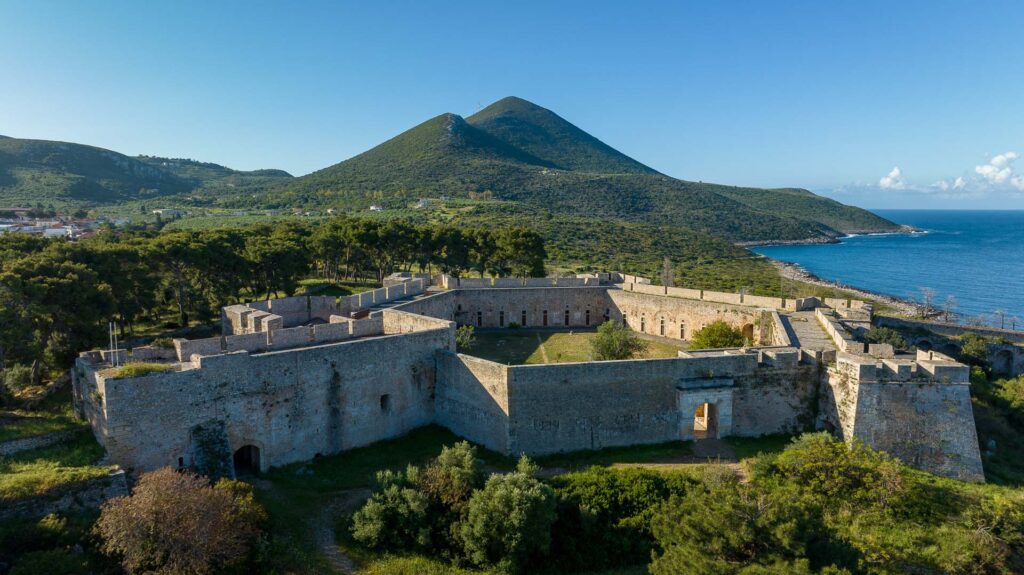
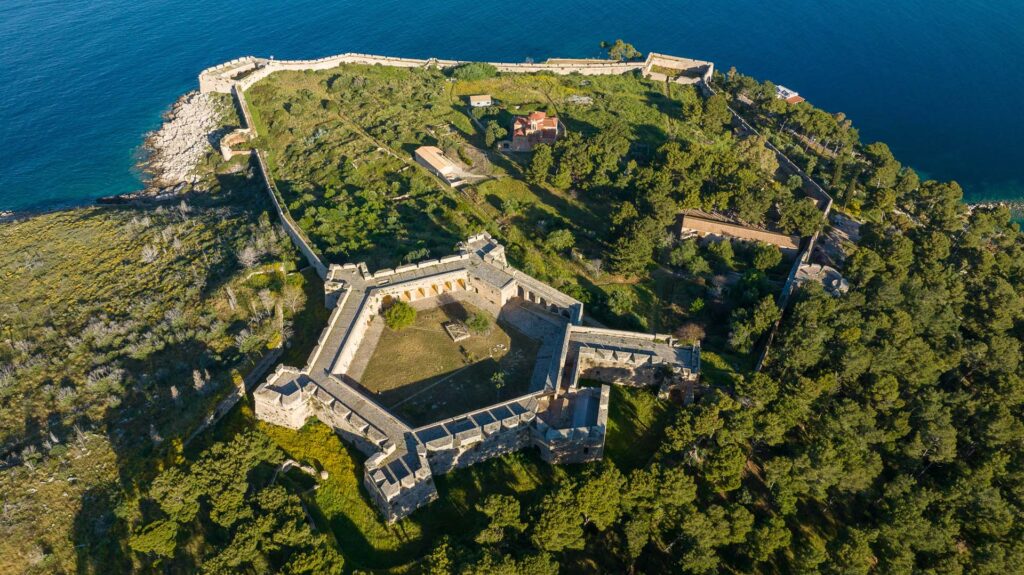
The Fortress of Niokastro was built by the Ottoman Turks in 1573, following their defeat at the Battle of Lepanto, in order to defend the southern entrance to Navarino Bay and control the maritime trade route connecting East and West. Between 1686 and 1715, it was under Venetian rule, and in 1770 it was captured by the Orlov brothers during the Russo-Turkish War. In 1821, the Greeks seized Niokastro and held it until 1825, when, after a determined resistance, it was surrendered to Ibrahim Pasha. In October 1827, the fleets of the Great Powers fought and defeated Ibrahim Pasha in the Battle of Navarino, which took place in Navarino Bay, compelling him to end his devastating campaign in the Peloponnese.

 http://odysseus.culture.gr/ https://www.efamess.gr/

Amenities
Free Parking
FAQ
After 1830, the new town was established outside the fortress walls and was given the auspicious name "Pylos." The fortress was subsequently abandoned, and the citadel was converted into a prison. Niokastro, or New Navarino, as it was named in contrast to Old Navarino, was built during a period when artillery had become the principal means of both offensive and defensive warfare. Its walls were thick enough to withstand cannon fire, low in height to reduce their exposure to enemy artillery, and sloping to lessen the impact of projectiles. They were further reinforced by powerful bastions. The two most important bastions are located on the seaward side of the fortress—the so-called Seventh Bastion and Santa Maria Bastion—which protected both the entrance to the bay and the harbour. At the highest and most vulnerable point of the fortress, the citadel was constructed. It was further protected by a dry moat, six pentagonal bastions, and nearly sixty cannons mounted along its ramparts. Particularly impressive is the fortress's southern defensive wall, known as the Great Verge (Megali Verga), which connects the citadel with the Seventh Bastion. Access to the fortress was through the imposing southeastern gate, known as the "Zematistra." Today, only the ruins of the houses and public buildings remain within the fortress, together with the imposing mosque, which, following the liberation of Greece, was converted into the Orthodox Church of the Transfiguration of the Saviour.
Review
0
0 Review
Be the first to write a review.
Working Hour
  • Open Now
    UTC+009:00 AM - 06:00 PM
  • Monday
    09:00 AM - 06:00 PM
  • Tuesday
    09:00 AM - 06:00 PM
  • Wednesday
    09:00 AM - 06:00 PM
  • Thursday
    09:00 AM - 06:00 PM
  • Friday
    09:00 AM - 06:00 PM
  • Saturday
    09:00 AM - 06:00 PM
  • Sunday
    09:00 AM - 06:00 PM
Detail info
Keyword
ΠΥΛΟΣ
Location
Πύλος Μεσσηνίας
Map
Featured Listing

All Chat Users

    Start Chat

    Select a listing or user to start your chat.

    Browse Users

    Chat Settings

    Chat Theme
    0/50
    Set a greeting message to show to new chat participants. E.g., Welcome to my chat.
    0/50
    Set a fixed notification for the chat owner. E.g., We are off for this month.
    No images found.
    Compare Listings