







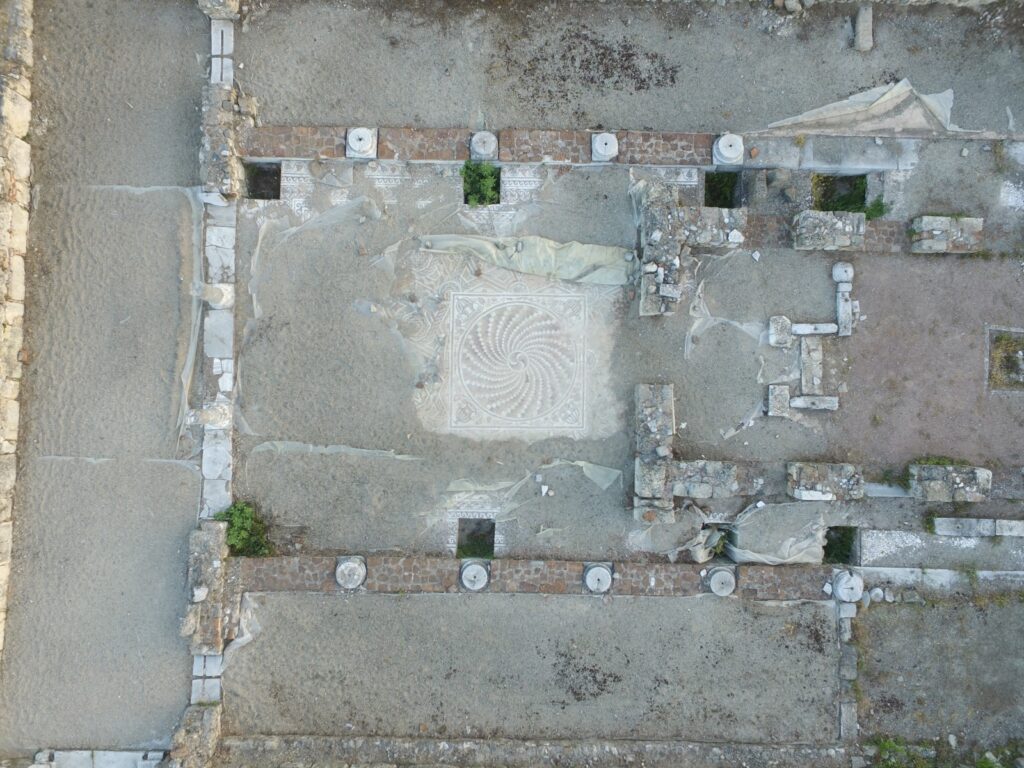
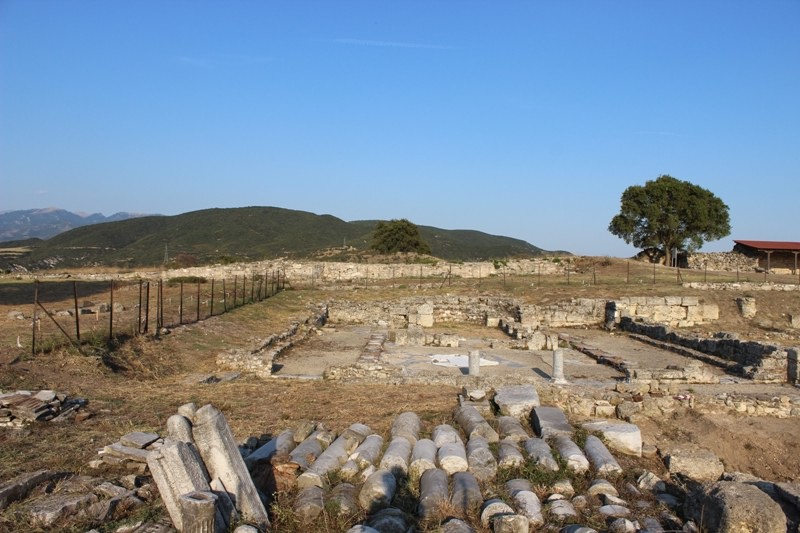


Amphipolis was founded in 438/7 BC, although the area had already been inhabited since the Neolithic period. During the Macedonian period, Amphipolis developed into a powerful and autonomous city of the Macedonian Kingdom, with significant economic and cultural growth. Excavations have revealed parts of the city walls, sanctuaries, and public and private buildings. After the Roman conquest of Macedonia in 168 BC, Amphipolis became the capital of the First District of Macedonia. Its position on the Via Egnatia and its rich hinterland contributed to its great economic and cultural prosperity until Late Antiquity. The strategic importance of Amphipolis was due to its location near the fertile mouth of the Strymon River and the gold-bearing deposits of Mount Pangaion, making it a valuable target for the Athenians. On the northern wall of the city, the large Gate C has been excavated, where a wooden bridge over the Strymon River ended, serving as an important defensive and transportation point. Excavations have brought to light significant parts of the city, including walls, public and private buildings, sanctuaries, mosaic floors, sculptures, and inscriptions. Particularly impressive is the Lion of Amphipolis, one of the most famous funerary monuments of ancient Greece. Another important monument is the Kasta Tomb, where a magnificent Hellenistic funerary complex was discovered, featuring unique architectural and sculptural elements, such as the Sphinxes, the Caryatids, and the famous mosaic depicting the abduction of Persephone.
http://odysseus.culture.gr/ Συντάκτης Πηνελόπη Αγαλλοπούλου, αρχαιολόγος
https://amphipolisproject.org/

