






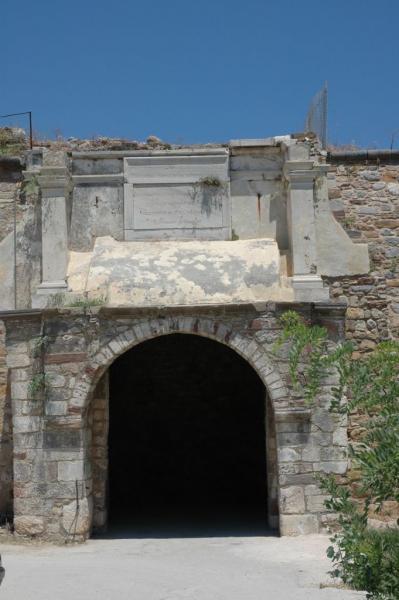
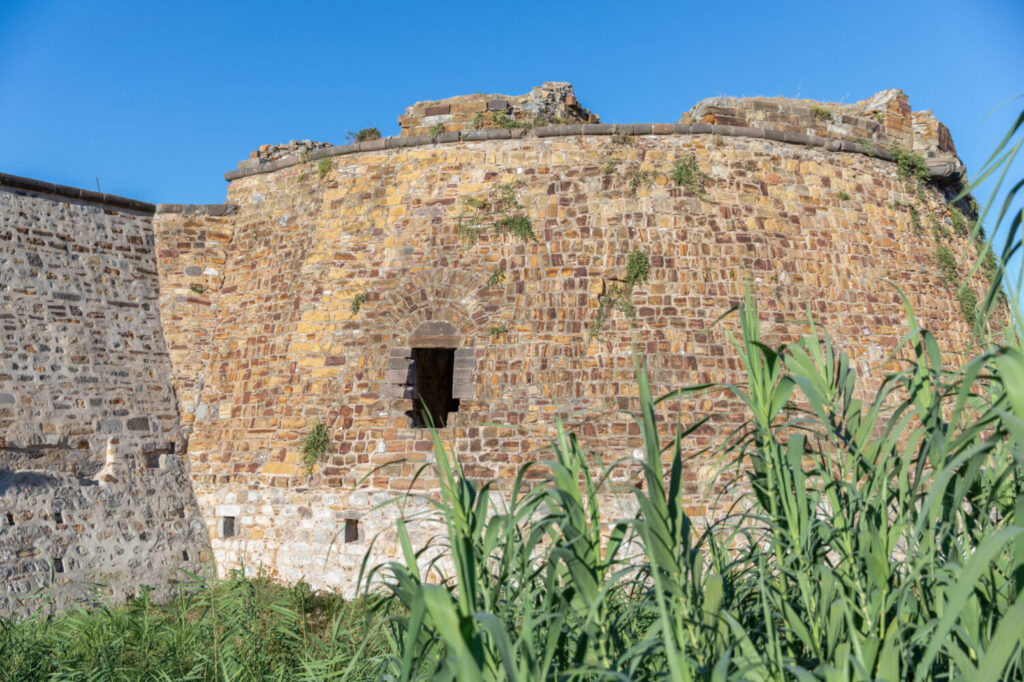
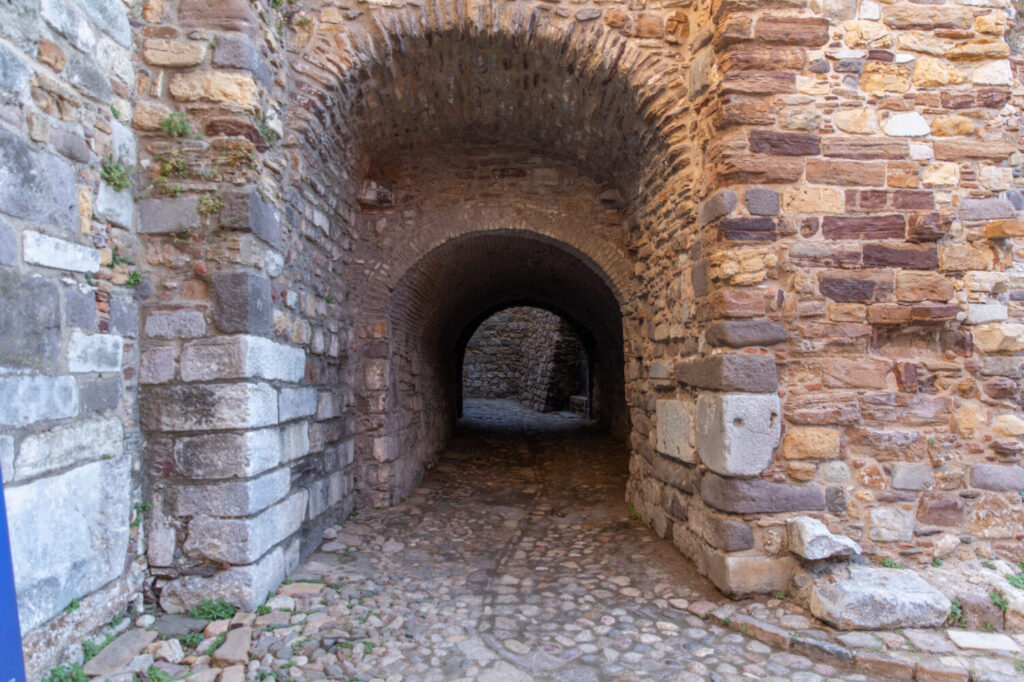


The ground floor of the tower known as the “Dark Prison” is located against the western side of the “Giustiniani Palace” and connects with the fortifications surrounding Porta Maggiore. Its construction was also commissioned by the Genoese. The room is almost square (10 × 8.50 m), covered by four cross vaults supported by a massive pillar at the centre. Circular and square openings at the crowns of the two eastern vaults provide partial lighting and ventilation. The building originally must have had at least two floors, of which no traces survive. Large, tall windows once opened on all sides but were blocked when the fortifications were modified at an unknown date. These windows alone provide sufficient evidence that the space was anything but dark when it was built and that it certainly was not a prison. The building is associated with a tragic event in the modern history of Chios: in 1822, the year of the Chios Massacre, fifty-five prominent citizens and Metropolitan Platon Frangkiadis were imprisoned here as hostages by the Turks before being led to the gallows. At the end of the winding, vaulted entrance passageway of Chios Castle (Porta Maggiore) stands the building known as the “Giustiniani Palace”. Today, following its restoration, it is used by the Ephorate of Byzantine Antiquities for temporary archaeological exhibitions. The “Little Palace” was restored between 1981 and 1985 and has served as a venue for temporary exhibitions since 1988, when the first exhibition was inaugurated. These exhibitions feature works of art and archaeological finds from various religious and secular monuments on Chios. The two-storey building has a raised ground floor and an open, colonnaded portico on its eastern side. It is constructed entirely of ashlar stone from Thymiana, in shades of yellow and red ochre. It dates to the 15th or 16th century, and it has been suggested that it served as the chancellery during the period of Genoese rule.קומת הקרקע של המגדל המכונה „הכלא האפל” צמודה לצדו המערבי של „ארמון ג'וסטיניאני” ומחוברת לביצורים שסביב שער פורטה מאג'ורה. גם בנייתו של המגדל נעשתה ביוזמת הגנואזים. החלל, שצורתו כמעט ריבועית ומידותיו 10 × 8.50 מטרים, מקורה בארבע קמרונות צולבים הנתמכים בעמוד מסיבי במרכז. בקודקודי שתי הקמרונות המזרחיים מצויים פתחים, אחד עגול ואחד מרובע, המאפשרים תאורה ואוורור חלקיים. במקור היו במבנה לפחות שתי קומות, אך לא נותר מהן כל שריד. בכל צדדיו היו חלונות גדולים וגבוהים, שנאטמו בעת שינויים שנערכו בביצורים בתקופה שאינה ידועה. חלונות אלה מעידים כשלעצמם שהחלל לא היה חשוך כלל בעת בנייתו ושבוודאי לא שימש כבית סוהר. המבנה קשור לאירוע טרגי בתולדותיה המודרניות של כיוס: בשנת 1822, שנת הטבח בכיוס, כלאו הטורקים במקום כבני ערובה 55 מנכבדי האי ואת המטרופוליט פלאטון פרנגיאדיס, לפני שהובילו אותם לגרדום. The ground floor of the tower known as the “Dark Prison” is located against the western side of the “Giustiniani Palace” and connects with the fortifications surrounding Porta Maggiore. Its construction was also commissioned by the Genoese. The room is almost square (10 × 8.50 m), covered by four cross vaults supported by a massive pillar at the centre. Circular and square openings at the crowns of the two eastern vaults provide partial lighting and ventilation. The building originally must have had at least two floors, of which no traces survive. Large, tall windows once opened on all sides but were blocked when the fortifications were modified at an unknown date. These windows alone provide sufficient evidence that the space was anything but dark when it was built and that it certainly was not a prison. The building is associated with a tragic event in the modern history of Chios: in 1822, the year of the Chios Massacre, fifty-five prominent citizens and Metropolitan Platon Frangkiadis were imprisoned here as hostages by the Turks before being led to the gallows. At the end of the winding, vaulted entrance passageway of Chios Castle (Porta Maggiore) stands the building known as the “Giustiniani Palace”. Today, following its restoration, it is used by the Ephorate of Byzantine Antiquities for temporary archaeological exhibitions. The “Little Palace” was restored between 1981 and 1985 and has served as a venue for temporary exhibitions since 1988, when the first exhibition was inaugurated. These exhibitions feature works of art and archaeological finds from various religious and secular monuments on Chios. The two-storey building has a raised ground floor and an open, colonnaded portico on its eastern side. It is constructed entirely of ashlar stone from Thymiana, in shades of yellow and red ochre. It dates to the 15th or 16th century, and it has been suggested that it served as the chancellery during the period of Genoese rule.
http://odysseus.culture.gr/Συντάκτης Όλγα Βάσση, Αρχαιολόγος
https://efachi.gr/ https://allofgreeceone.culture.gov.gr/

