







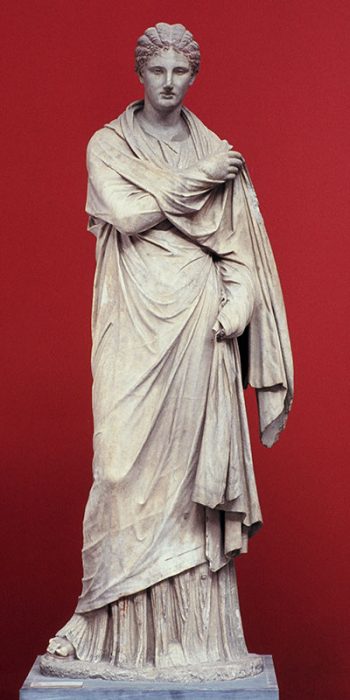
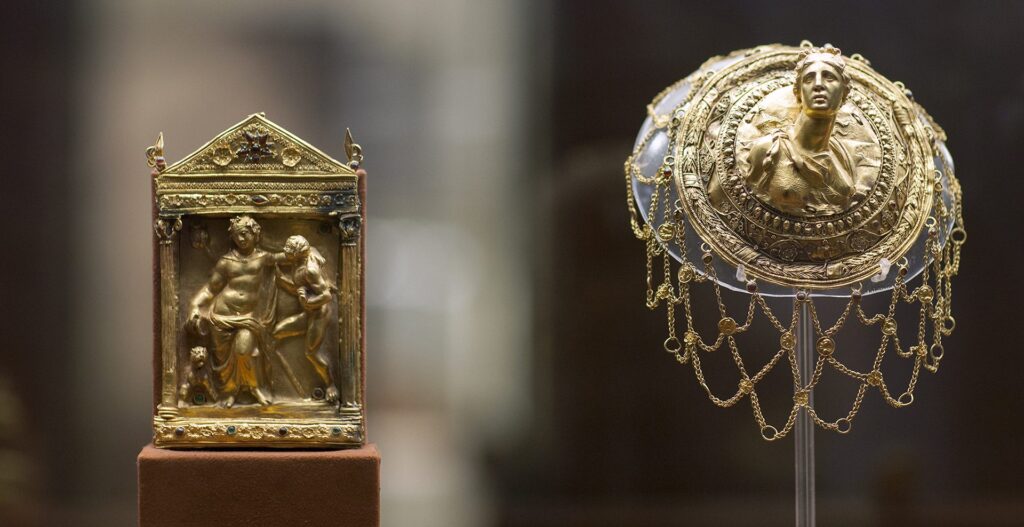
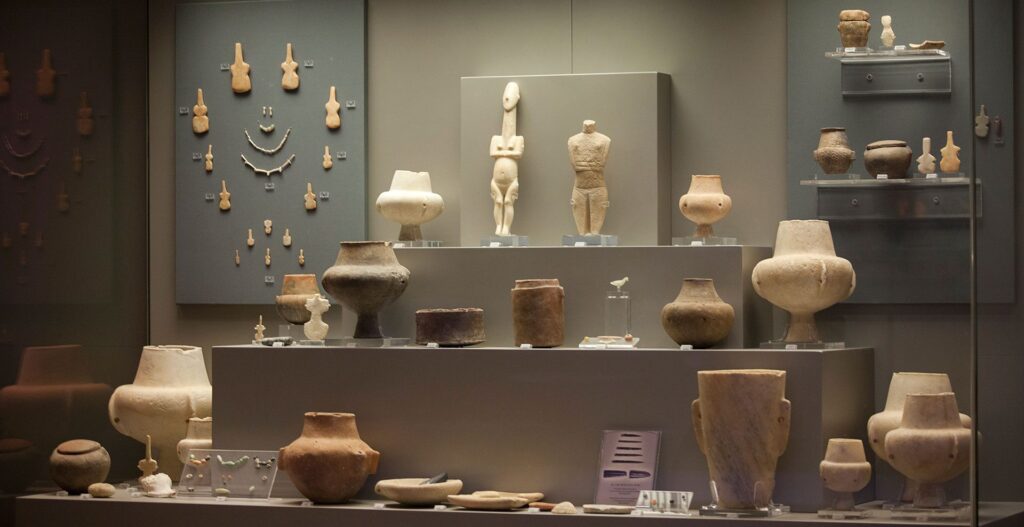
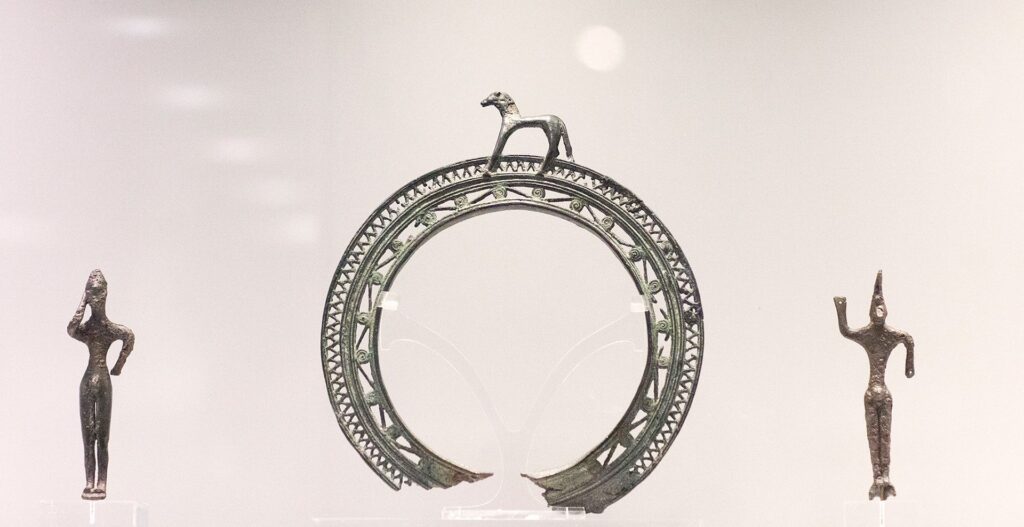
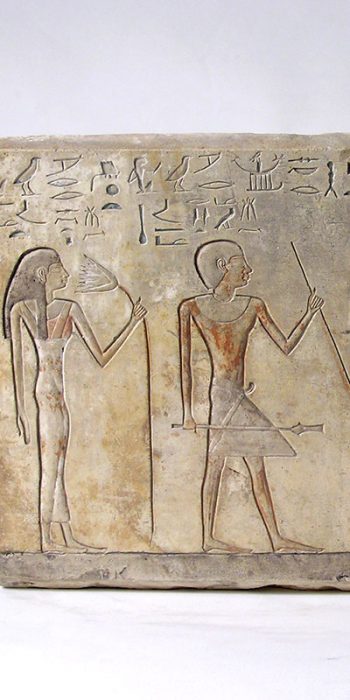

The National Archaeological Museum is the largest museum in Greece and one of the most important worldwide, housing over 11,000 exhibits that trace the course of Greek civilization from prehistory to late antiquity. It was founded in the late 19th century to collect and safeguard antiquities from across the country, while also serving as a center for research, education, and cultural outreach. The museum is housed in a neoclassical building originally designed by Ludwig Lange and later modified by Ernst Ziller, with exhibition spaces covering 8,000 square meters. It includes five major permanent collections: 1. Prehistoric Antiquities Collection – Neolithic, Cycladic, and Mycenaean art. 2. Sculpture Collection – Ancient Greek sculpture from the 7th century BC to the 5th century AD. 3. Vase and Minor Arts Collection – Pottery and small objects from the 11th century BC to the Roman period. 4. Metalwork Collection – Statues, figurines, and fine metal artifacts. 5. Egyptian and Near Eastern Antiquities Collection – From the Predynastic period to the Roman conquest. The museum also features a library, a photographic archive, modern conservation laboratories, and halls for temporary exhibitions. It organizes educational programs, guided tours for visitors with hearing impairments, temporary exhibitions, and participates in international exhibitions. Its establishment was formalized by presidential decree in 1893, while the transfer of antiquities had already begun in 1874. During World War II, the collections were stored in secure shelters, and after the war their gradual reinstallation began, completed in 1964.
ΠΗΓΗ:http://odysseus.culture.gr https://www.namuseum.gr https://www.facebook.com/namuseumathens/?locale=el_GR

