







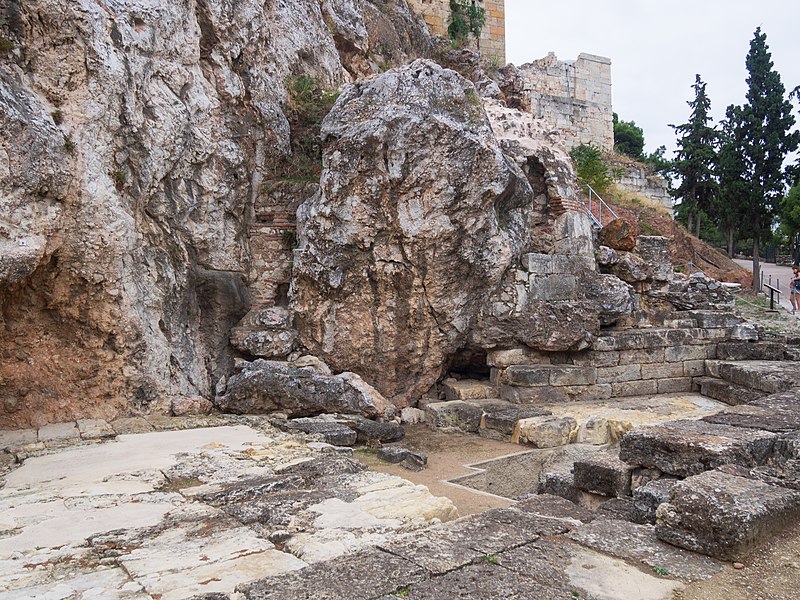
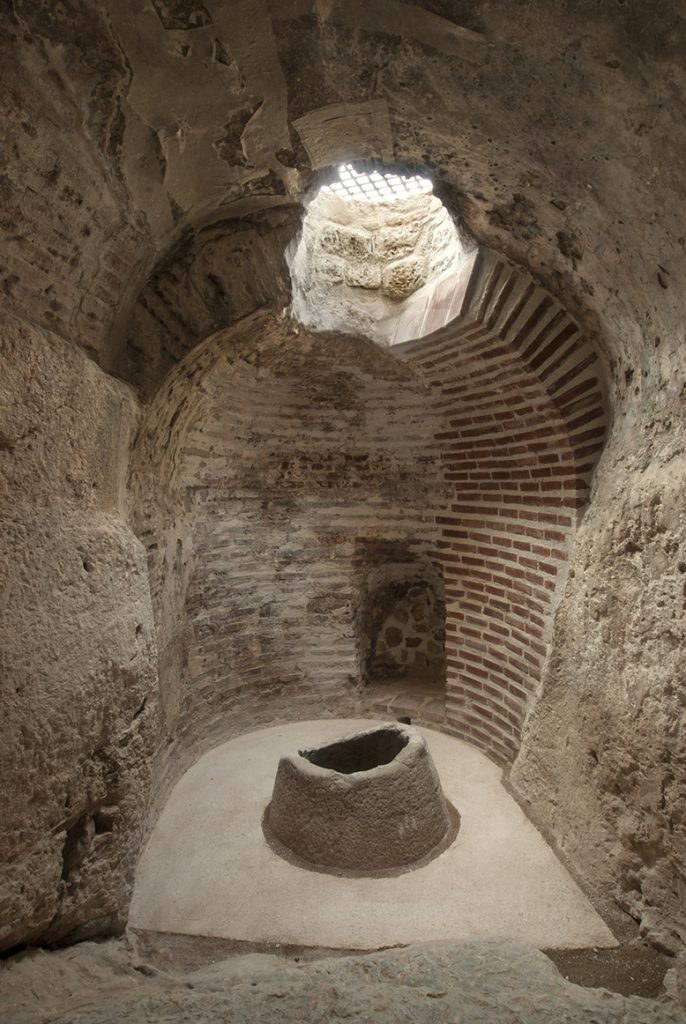


The most well-known and significant natural spring of the Sacred Rock, the Klepsydra, located on the Northern Slope, extends south of the Peripatos. Since Neolithic times, it has provided abundant water, which the inhabitants drew from wells. Its earliest name was Empedo, after the nymph who was worshiped in the area. Later, it was renamed Klepsydra due to the fact that part of its waters was “stolen” during the summer months and transported via an underground channel to the Athenian harbor of Phaleron. The first fountain structure was built during the time of Cimon (470–460 BC) and consisted of a rectangular reservoir with water inlets and a platform for drawing water. At the same time, a large paved courtyard was constructed in front of the fountain, though its purpose remains unclear. Rock collapses during the Roman period blocked the spring, and later a well was dug and protected with a vaulted structure. During the Christian era, the spring was converted into a small chapel, known as the Holy Apostles in Marble. During the years of the Greek War of Independence, the Klepsydra provided drinking water to Greek fighters, incorporated into a bastion built by Odysseas Androutsos.
http://odysseus.culture.gr https://efaathculture.gr

