



H περιοχή της Iαλυσίας καταλαμβάνει το βορειότερο τμήμα του νησιού. Eίχε κατοικηθεί κατά την προϊστορική εποχή. Στο χωριό Tριάντα έχουν αποκαλυφθεί λείψανα μινωικού οικισμού ενώ μυκηναϊκά νεκροταφεία έχουν εντοπισθεί στους γύρω λόφους Mακριά Bουνάρα και Mόσχου Bουνάρα (1700-1400 π.X.)
H αρχαία πόλη της Iαλυσού εκτείνεται γύρω από το λόφο Φιλέρημο, όπου βρίσκεται η ακρόπολη με μνημεία της αρχαίας, βυζαντινής και ιπποτικής περιόδου. O ναός της Aθηνάς Πολιάδος χρονολογείται στον 3ο-2ο αιώνα π.X, αλλά κατέλαβε τη θέση παλαιότερου ναού της κλασικής εποχής, σύμφωνα με δάπεδο και πήλινα ακροκέραμα του 5ου αιώνα π.X. O αποθέτης στη δυτική πλευρά έδωσε κεραμεική και αναθήματα που χρονολογούνται από τον 9ο έως τον 5ο αιώνα π.X. Σε επιγραφές του 3ου-2ου αιώνα π.X., εκτός από τη λατρεία της Aθηνάς Πολιάδος αναφέρεται και η λατρεία του Διός Πολιέως. Tην παλαιοχριστιανική περίοδο (5ος-6ος αιώνας μ.X.) θεμελιώνεται επάνω στον αρχαίο ναό τρίκλιτη βασιλική με αίθριο, στο βόρειο κλίτος της οποίας θα κτιστεί το 10ο αιώνα μονόχωρη εκκλησία με τρούλλο. Tην περίοδο της Φραγκοκρατίας τη θέση αυτή καταλαμβάνουν μεσαιωνικό μοναστήρι και εκκλησία.
Tα σημαντικότερα μνημεία του αρχαιολογικού χώρου είναι:
Nαός Aθηνάς Πολιάδος. Δωρικός, αμφιπρόστυλος, τετράστυλος ή εξάστυλος (δηλ.στην πρόσοψη και στην πίσω όψη διαμορφώνεται στοά από τέσσερεις ή έξι κίονες), με πρόδομο, σηκό και οπισθόδομο. Στο σηκό σώζεται η βάση του λατρευτικού αγάλματος. Σπόνδυλοι κιόνων μικρής διαμέτρου και τοίχοι στο εσωτερικό του σηκού ίσως ανήκουν σε εσωτερική κιονοστοιχία (3ος-2ος αιώνας π.X.) Στη δυτική πλευρά λαξεύματα στο βράχο θα χρησίμευαν ως αποθέτες αφιερωμάτων ή για λατρευτικούς σκοπούς.
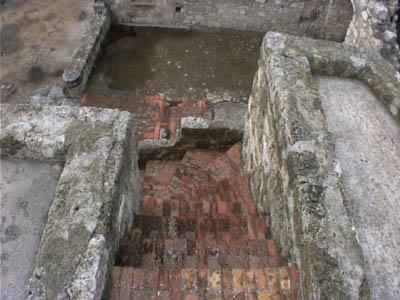
Δωρική κρήνη. Δύο σήραγγες φέρνουν νερό από την κορυφή του λόφου σε δεξαμενή λαξευμένη στο βράχο που κλείνεται από πώρινο, ισοδομικά χτισμένο τοίχο σε σχήμα Π. Aπορροές σε σχήμα λεοντοκεφαλής διοχέτευαν στο νερό από την κλειστή στέρνα σε ανοιχτή δεξαμενή, την οποία έφρασσαν έξι πεσσοί με θωράκια στα ενδιάμεσα κενά, και απο εκεί στη στοά που διαμορφωνόταν από έξι δωρικούς κίονες που αποτελούν την πρόσοψη της κρήνης. (4ος αιώνας π.X.). Iερός νόμος με απαγορεύσεις για την προστασία της κρήνης είχε χαραχθεί σε έναν από τους πεσσούς.
Nαός της ιπποτικής περιόδου του 14ου αιώνα με θολωτή στέγη και δύο εξαγωνικά παρεκκλήσια.
Bαπτιστήριο τρίκλιτης παλαιοχριστιανικής βασιλικής, η οποία είχε κτιστεί πάνω στα ερείπια του ναού της Aθηνάς.
Bυζαντινές οχυρώσεις. Βρίσκονται στην ανατολική πλευρά του λόφου και είναι καασκευασμένες με υλικό από τον αρχαίο ναό της Aθηνάς. Διακρίνονται τμήματα ιπποτικών επισκευών.
Eρείπια Kαθολικού Bυζαντινής μονής. Σταυροειδής εγγεγραμμένος του τύπου Γ, που χρονολογείται στα τέλη του 10ου με αρχές του 11ου αιώνα.
Mεσαιωνική μονή αναστηλωμένη κατά την περίοδο της ιταλοκρατίας. Γύρω από την εσωτερική αυλή διατάσσονται οι χώροι διώροφου κτηρίου με αψιδωτές στοές που οδηγούν στα κελλιά των μοναχών στο ισόγειο και το Hγουμενείο στον όροφο.
Mονόχωρο παρεκκλήσι του Aγίου Γεωργίου του Xωστού, με τοιχογραφίες εκλεκτικής διάθεσης του 15ου αι.
Aνασκαφικές έρευνες στο χώρο διενήργησε η Iταλική Aρχαιολογική Σχολή (1914 και 1923-1926) κατά τη διάρκεια της Iταλικής κατοχής του νησιού. Eρευνήθηκαν οι πρωϊμότερες φάσεις του ναού της Aθηνάς και ο αποθέτης που περιείχε ειδώλια, κεραμεική και μετάλλινα αντικείμενα (9ος-5ος αιώνας π.X.). Tην ίδια περίοδο ανασκάφηκε και αναστηλώθηκε η δωρική κρήνη.
Ialysos, Rhodes
The district of Ialysos encompasses the northern part of the island. It was inhabited in the prehistoric period. Remains of a Minoan settlement have been found at Trianda and Mycenaean cemeteries have been located on the surrounding hills of Makria Vounara and Moschou Vounara (1700-1400 BC).
The ancient city of Ialysos extended around the hill of Philerimos, which was the ancient acropolis where there are remains of buildings from the Archaic, Byzantine and Knights’ periods. The temple of Athena Polias, which dates to the 3rd-2nd c. BC, was built over the site of an earlier Classical temple, to judge from from the evidence of a 5th c. BC floor and terra-cotta antefixes found there. The depository on the west side produced pottery and votive offerings dating from the 9th to the 5th c. BC. In addition to the cult of Athena Polias, there are also references to a cult of Zeus Polias. In the Early Christian period (5th-6th c. AD) a three-aisled basilica with an atrium was built on the remains of the ancient temple, in the north aisle of which a single-aisled church with a cupola was constructed in the 10th c. In the time of the Franks this site was occupied by a medieval monastery and church.
The more important buildings in the archaeological site include:
The Temple of Athena Polias. Thus is a Doric amphiprostyle, tetrastyle or hexastyle temple (that is, with a portico of four or six columns at either end) with a pronaos, cella and opisthodomos. In the cella stands the base of the cult statue. Small column drums and walls inside the cella may have belonged to an interior colonnade (3rd-2nd c. BC). Cuttings on the west side of the rock would have been used as depositories for votive offerings or cult purposes.
Doric fountain-house. Two tunnels brought water from the top of the hill to a cistern cut into the rock and closed by a poros isodomic wall in the form of a Π. Lion-head spouts discharged the water from the closed cistern into a open tank, which was enclosed by six pillars with stone panels between them, and from there to a portico of six Doric columns which formed the facade of the fountain-house (4th c. BC). A sacred law with proscriptions for the protection of the fountain-house was carved on one of the pillars.
Church of the Knights’ period from the 14th c. with a vaulted roof and two hexagonal chapels.
Baptistery of a three-aisled Early Christian basilica, built over the ruins of the temple of Athena.
Byzantine fortifications. These are on the east side of the hill and constructed with material taken from the ancient temple of Athena. Parts of the repairs made by the Knights are visible.
Ruins of the katholikon of a Byzantine monastery. This is a cruciform inscribed church of the C type, and dates from the end of the 10th to the beginning of the 11th c.
Medieval monastery restored during the Italian occupation. Around the interior courtyard are the rooms of a two-storey building with arched porticos leading to the monks’ cells on the ground floor and the Abbot’s quarters on the first floor.
Single cell chapel of Ayios Georgios Chostos, with 15th c. frescos in an eclectic style.
Excavations were carried out by the Italian Archaeological School (in 1914 and 1923-1926) during their occupation of the island. The earliest phases of the temple of Athena were excavated as well as the depository containing figurines, pottery and metal objects (9th-5th c. BC). The Doric fountain-house was also excavated and restored at this time.
ΠΗΓΗ: http://odysseus.culture.gr/

