

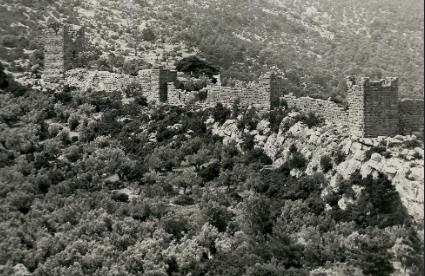


Το φρούριο των Αιγοσθένων δεσπόζει στον ομώνυμο ανατολικό όρμο του Κορινθιακού κόλπου. Η θέση φαίνεται να έχει χρησιμοποιηθεί από τα γεωμετρικά έως τα μεταβυζαντινά χρόνια. Το φρούριο κτίστηκε στο β΄ μισό του 4ου αι. π.Χ. και αποτελεί ένα από τα καλύτερα διατηρημένα αρχαία φρούρια στον ελλαδικό χώρο.
Κατά την κλασική περίοδο τα Αιγόσθενα αποτελούσαν κώμη των Μεγάρων. Αργότερα, τον 2ο αι. π.Χ., εντάχθηκαν ως ανεξάρτητη πόλη στο Κοινό των Βοιωτών.
Στα Αιγόσθενα μαρτυρείται λατρεία του μάντη και θεραπευτή Μελάμποδα, το ιερό του οποίου εκτιμάται ότι βρίσκεται κάτω από την ακρόπολη, στον εντός των μακρών τειχών χώρο.
Ένδειξη για τη συνέχιση της κατοίκησης κατά τους παλαιοχριστιανικούς χρόνους αποτελεί η πεντάκλιτη βασιλική του 5ου αι. μ.Χ. Επάνω στα ερείπια της βασιλικής, κτίστηκε, τον 11ο αι., το μικρό εκκλησάκι της Παναγίας ή Αγίας Άννας με αρχαίο οικοδομικό υλικό. Στην ύστερη βυζαντινή και μεταβυζαντινή περίοδο, ο χώρος της ακρόπολης φιλοξένησε μοναστήρι, από το οποίο σώζονται τα ερείπια κελιών, καθώς και το καθολικό, ο μικρός ναός του Αγίου Γεωργίου.
Το 1981 ο ισχυρός σεισμός των Αλκυονίδων στον Κορινθιακό κόλπο επέφερε σημαντικές βλάβες και καταρρεύσεις σε όλο το φρούριο.
Από το 2011 το Υπουργείο Πολιτισμού έχει ξεκινήσει εργασίες αναστήλωσης και αποκατάστασης του φρουρίου, με συγχρηματοδότηση της Ελλάδας και της Ευρωπαϊκής Ένωσης.
Το έργο αναστήλωσης του ΝΑ πύργου της ακρόπολης, που είχε ως φυσικό αντικείμενο την αποκατάσταση του μνημείου στη μορφή που είχε στην αρχαιότητα, έχει ολοκληρωθεί και στον επισκέπτη δίδεται πλέον η δυνατότητα πρόσβασης στο εσωτερικό του πύργου και ανόδου έως τον τελευταίο του όροφο, από όπου έχει πλήρη εποπτεία του φρουρίου και της ευρύτερης περιοχής.
Ancient Fortress of Aigosthena
The fortress of Aigosthena, built on a low hill 450 m. above sea level on the slopes of Mountain Kithairon, commands the eastern end of the Corinthian Culf. The site appears to have been in use from Geometric to Byzantine times. In the Classical period, specifically during the 4th century B.C., when the fortress was constructed, Aigosthena was under Megarian control. The latest research indicates that the fortress was probably built in 343 B.C. with the assistance of the Athenians after they allied themselves with the Megarians to confront the Theban threat. For this reason an Athenian garrison was stationed here.
The hilltop includes the Acropolis, measuring 190 x 80 meters, which is enclosed by a circuit wall with towers. The east side is preserved to a great height; it is reinforced by four towers and has a sally port. The towers are constructed in the isodomic style, whereas the walls feature trapezoidal, polygonal, or irregular masonry styles.
The most impressive feature of the fortress is its southeast tower. It is square (sides 8.8m.) and some 20 meters in height. Joist-holes on the interior for supporting wooden floor beams provide evidence for three storeys. On the three vulnerable sides there are archers? slots and in the top storey, which would have had a double pitched roof, three catapult windows on both the south and north sides reinforce the defensive character of the tower.
The Acropolis was connected to the harbour by long walls, of which only the northern one is visible today. It was reinforced by eight towers and bastions and had at least two gates.
There is evidence at Aigosthena for the cult of the hero and soothsayer Melampus, whose sanctuary is thought to be below the Acropolis in the area inside the long walls. Habitation during the Early Christian period is attested by the 5th century A.D. five-aisled basilica constructed of ancient building material which lies adjacent to the modern church of Panaghia. In Post-Byzantine times, the Acropolis area held a monastery, from which the ruins of monks? cells and the katholikon (main church), the small church of Aghios Georgios, are preserved today.
In 1981, a powerful earthquake caused the partial collapse of the SE tower, which is currently being restored by the 3rd EPCA with funds from the National Strategic Reference Framework (NSRF).
ΠΗΓΗ: http://odysseus.culture.gr/ Συντάκτης Πολυτίμη Βαλτά-Ειρήνη Σβανά
https://www.efada.gr/

