

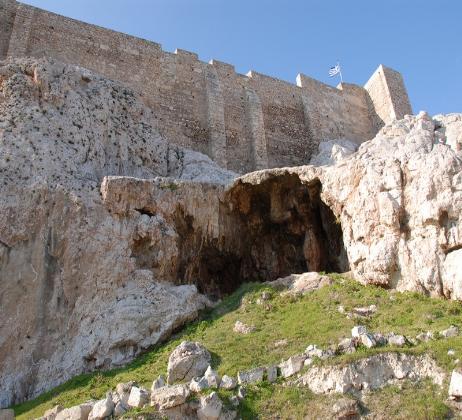
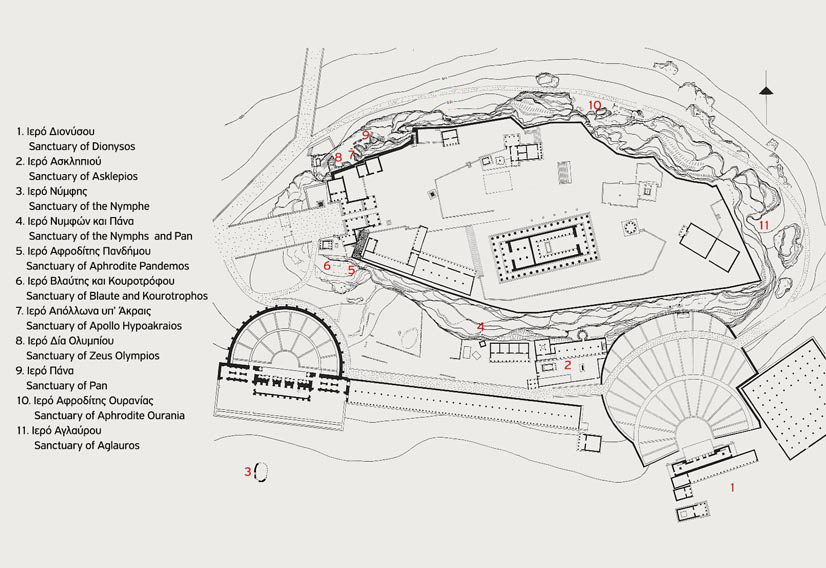


Στην Ανατολική Κλιτύ της Ακρόπολης δεσπόζει το μεγαλύτερο σπήλαιο της πόλης (διαστ. 22μ. από Δ προς Α και άνοιγμα 14μ.). Η ανεύρεση το 1980 στο χώρο ανατολικά του σπηλαίου ενεπίγραφης στήλης με χαραγμένο ψήφισμα του Αθηναϊκού δήμου του 247/6 ή 246/5 π.Χ., το οποίο τιμούσε την ιέρεια της νύμφης Αγλαύρου Τιμοκρίτη, οδήγησε τον ανασκαφέα Γ. Δοντά στην τοποθέτηση του ιερού της Αγλαύρου στη συγκεκριμένη θέση, ενώ η ως τότε έρευνα το συνέδεε με σπήλαιο της Βόρειας κλιτύος.Η ταύτιση αυτή, αν και δεν έγινε ομόφωνα αποδεκτή από το σύνολο της επιστημονικής κοινότητας, συνέβαλε στην αναθεώρηση ορισμένων απόψεων για την τοπογραφία της αρχαίας Αθήνας, ιδίως για την θέση σημαντικών ιερών και άλλων κτηρίων. Σύμφωνα με τη μαρτυρία του Ηροδότου από το σημείο του σπηλαίου της Αγλαύρου εισέβαλαν στην Ακρόπολη το 480 π.Χ. οι Πέρσες. Στο ιερό της κόρης του μυθικού βασιλιά Κέκροπα, η οποία έπεσε από την Ακρόπολη για να σώσει την Αθήνα από την παρατεταμένη πολιορκία, προσέρχονταν οι Αθηναίοι έφηβοι φορώντας την πολεμική τους εξάρτυση, μόλις συμπλήρωναν το 18ο έτος της ηλικίας τους, και έδιναν όρκο πίστης και υπεράσπισης μέχρι θανάτου των «ιερών και των οσίων», μιμούμενοι το παράδειγμα της Νύμφης.
ΠΗΓΗ: http://odysseus.culture.gr https://efaathculture.gr/

